Showing posts with label Darjeeling Himalayan Railway. Show all posts

Walking in the Shoes of Locals: Wearing Gurkha Dress at Batasia Loop Darjeeling

Batasia Loop, located in Darjeeling, India, is a popular tourist destination known for its stunning views of the Himalayas and its unique railway loop that circles around a beautiful garden. Visitors often flock to this spot to witness the mesmerizing view of the Kanchenjunga mountain range and to take a ride on the Darjeeling Himalayan Railway, a UNESCO World Heritage Site.

If you're planning a visit to Batasia Loop, one way to make your experience even more memorable is by wearing the traditional dress of the Gorkha community. The Gorkhas are an ethnic group that originated in Nepal, but are also found in India and Bhutan. The Gorkhas are known for their bravery, loyalty, and distinctive traditional attire.

The traditional dress of the Gorkha community consists of a variety of garments, including a top called a "daura," which is a long-sleeved shirt with a high collar and five pleats in the front and back. The "daura" is worn over a shirt called a "chuwa," which is similar to a vest. The lower garment is called a "suruwal," which is a loose-fitting pant that tapers at the ankle. To complete the look, a scarf called a "patuka" is draped over the shoulders.

Wearing the Gorkha traditional dress in Batasia Loop is a great way to show your appreciation for the local culture and to immerse yourself in the unique traditions of the Gorkha community. It also provides a great photo opportunity with the stunning backdrop of the Himalayas and the loop of the railway track.


While it is not mandatory to wear the Gorkha traditional dress in Batasia Loop, it is highly encouraged as a way to pay homage to the local culture and traditions. If you do decide to wear the traditional dress, it is important to do so respectfully and with a deep understanding of the significance behind the attire. You can learn more about the Gorkha community and their traditions by speaking with locals, visiting museums or cultural centers, or researching online.

However, the experience is not only fun, but also provides an opportunity to learn about the local culture and history. The nominal fee of Rs 50 makes it an affordable and accessible activity for all visitors. It is an excellent way to capture some memorable photos and take home a special souvenir from your visit to Darjeeling.


Credit Google

In conclusion, wearing the Gorkha traditional dress in Batasia Loop is a wonderful way to appreciate and respect the local culture and traditions of the Gorkha community. It is also a unique and memorable experience that you won't soon forget. So, if you're planning a trip to BatasiaLoop, consider donning the traditional dress and immersing yourself in the rich heritage of this beautiful region.

Read: Things to Do in Batasia Loop Darjeeling 

Read:  Other Blog Posts


A Glimpse into History at the Sukna DHR Museum: The Fascinating Journey of Darjeeling Himalayan Railway

The Sukna DHR Museum, also known as the Darjeeling Himalayan Railway Museum, is a fascinating museum located in the town of Sukna in the Darjeeling district of West Bengal, India. The museum is dedicated to the Darjeeling Himalayan Railway (DHR), which is also known as the "Toy Train" due to its small size. The DHR is a narrow-gauge railway that was built in the late 19th century and has been designated as a UNESCO World Heritage Site.

The Sukna DHR Museum was opened in 2000 and is housed in a restored railway station building that was originally built in 1881. The museum showcases the history of the DHR and its importance to the region. It features a range of exhibits, including vintage locomotives, carriages, photographs, and other artifacts that tell the story of the railway.


Main Attraction of Sukna DHR Museum

The Sukna DHR Museum showcases the rich history and heritage of the Darjeeling Himalayan Railway, also known as the "Toy Train." Some of the main attractions of the museum include:

  1. Antique Locomotives: The museum houses some of the oldest steam locomotives, including the B-Class and C-Class engines, that were used on the Darjeeling Himalayan Railway. In this  display of a fully restored DHR steam locomotive, visitors can climb aboard and explore. 
  2. Vintage Photographs and Artefacts: Visitors can explore a collection of vintage photographs, documents, and artefacts that provide insights into the history and evolution of the railway.
  3. Model Train Sets: The museum features various model train sets that showcase the different types of locomotives and rolling stock that were used on the Darjeeling Himalayan Railway.
  4. Interactive Exhibits: The museum also has interactive exhibits that allow visitors to learn about the various components of a steam locomotive and how they functioned.
  5. Souvenir Shop: Visitors can purchase souvenirs such as books, postcards, and other merchandise related to the Darjeeling Himalayan Railway and the museum.
  6. Library: The museum also has a small library with a collection of books and documents related to the DHR, as well as a souvenir shop where visitors can purchase mementos of their visit.


Visiting Time 

Visiting the Sukna DHR Museum is a great way to spend a day in the Darjeeling region. The museum is open from 10:00 am to 4:00 pm on weekdays and from 10:00 am to 2:00 pm on Saturdays. 

Admission is free, although donations are appreciated.

Overall, the Sukna DHR Museum is a must-visit destination for anyone interested in the history of railways or the Darjeeling region. It provides a fascinating glimpse into the past and a unique perspective on the engineering and ingenuity required to build and maintain a railway in such challenging terrain.


In conclusion, the Sukna DHR Museum is a must-see destination for anyone interested in the history of railways or the Darjeeling region. It is a fascinating museum that provides a unique perspective on the challenges of building and maintaining a railway in such a challenging environment. Visitors are sure to come away with a newfound appreciation for the ingenuity and hard work required to create such an engineering marvel.

Read: Kurseong DHR Museum 

Read: Ghum DHR Museum 

Read: Extensive post of DHR Toy Train 

Unveiling the Untold Stories: A Journey through DHR Kurseong Toy Train Museum

The Darjeeling Himalayan Railway (DHR) is a UNESCO World Heritage Site, known for its breathtaking views and unique narrow-gauge steam locomotives. The railway line runs through the hills of Darjeeling, offering tourists a chance to experience the natural beauty of the region. At the heart of the DHR lies the DHR Museum in Kurseong, which offers visitors an opportunity to delve into the history of this fascinating railway.

The DHR Museum is located in the Kurseong Railway Station, which is one of the stops on the DHR line. The museum was established in 1998 to preserve and showcase the history of the DHR. The museum is spread over two floors and features a wide range of exhibits, including photographs, artifacts, and interactive displays.


The ground floor of the museum features a collection of photographs and artifacts related to the history of the DHR. Visitors can see original documents, photographs, and tools used during the construction of the railway line. There are also displays showcasing the different types of locomotives used by the DHR over the years. One of the most fascinating exhibits on the ground floor is the working model of a steam locomotive, which gives visitors a chance to see how these machines worked.

The first floor of the museum is dedicated to interactive displays and exhibits. Visitors can learn about the different components of a steam locomotive and how they work together. There are also displays showcasing the different types of carriages used by the DHR, including first-class carriages, which were used by the British during colonial times. Visitors can even take a virtual journey on the DHR through a simulated train ride.

One of the HIGHLIGHTS of the museum is the chance to see the Darjeeling Mail, which is the oldest working steam locomotive in India. The locomotive was built in 1889 and has been in continuous use on the DHR since then. Visitors can see the locomotive up close and learn about its history from the museum staff.

The museum also has a souvenir shop where visitors can buy books, postcards, and other memorabilia related to the DHR. The shop is a great place to buy souvenirs for friends and family back home.

Overall, the DHR Museum in Kurseong is a must-visit for anyone interested in the history of the Darjeeling Himalayan Railway. The museum provides a fascinating insight into the construction and operation of this unique railway line. Visitors can learn about the different types of locomotives and carriages used by the DHR over the years, and even take a virtual journey on the railway. The museum is a great place to spend a few hours and is suitable for visitors of all ages.


Time:

The museum is open from 10:00 am to 4:00 pm, and it remains closed on Mondays and national holidays.

Ticket Price:

The entry fee for Indian visitors is Rs. 20 per person, and for foreign tourists, it is Rs. 100 per person. Please note that these details might have changed and it is always advisable to check the official website or contact the museum directly for the latest information

In conclusion, the DHR Museum in Kurseong is a treasure trove of information and history related to the Darjeeling Himalayan Railway. Through its exhibits, photographs, artifacts, and interactive displays, the museum provides visitors with a comprehensive understanding of the construction and operation of the railway line, as well as the locomotives and carriages used over the years. The chance to see the oldest working steam locomotive in India, the Darjeeling Mail, up close is an unforgettable experience. Overall, the DHR Museum is a must-visit for anyone interested in the history of the DHR and is an excellent way to spend a few hours while exploring the beautiful hills of Darjeeling.


Read Ghum DHR Museum

From Steam Engines to Souvenirs: Discovering the Delights of Ghum DHR Museum

Located in the quaint hill station of Darjeeling in West Bengal at the altitude of  2258 metres (7407 Feet) Ghum DHR (Darjeeling Himalayan Railway) Museum is a popular tourist attraction that offers visitors a glimpse into the rich history and heritage of the Darjeeling Himalayan Railway.

The museum is housed in the Ghum Railway Station, which is the highest railway station in India and the second-highest in the world. It was established in 1881 and is one of the oldest and most scenic railway routes in the country.

The Ghum DHR Museum was inaugurated in 1998 and has since become a major draw for tourists and railway enthusiasts alike. The museum houses a collection of artifacts, photographs, and documents related to the history of the Darjeeling Himalayan Railway.

The museum is dedicated to showcasing the history of the Darjeeling Himalayan Railway, which is a UNESCO World Heritage Site.The Darjeeling Himalayan Railway, also known as the "Toy Train," was added to the UNESCO World Heritage List in 1999. The railway is a narrow-gauge railway that runs for 78 kilometers through the lower Himalayas from New Jalpaiguri to Darjeeling. The railway was built between 1879 and 1881 and is known for its stunning views of the Himalayan Mountains, tea plantations, and scenic landscapes.

Entrance to DHR Ghum Museum


The Ghum DHR Museum was established in 1998 to showcase the history and heritage of the Darjeeling Himalayan Railway. The museum is located in the town of Ghum, which is one of the highest points on the railway line, at an altitude of 2,258 meters above sea level.

While the museum was established a year before the Darjeeling Himalayan Railway was added to the UNESCO World Heritage List, its inclusion in the list was certainly a significant recognition of the railway's cultural and historical significance. The Ghum DHR Museum is a valuable resource for visitors who want to learn more about the history and development of the railway, its technology, and its impact on the local communities.

The museum has a number of exhibits, each showcasing a different aspect of the railway's history. One of the most popular exhibits is the collection of vintage locomotives and coaches that have been preserved and restored to their former glory. Visitors can see how the steam engines were operated and maintained in the early days of the railway.

Another interesting exhibit is the collection of photographs and documents that chronicle the history of the railway, from its construction in the late 19th century to the present day. Visitors can learn about the challenges faced by the builders of the railway and how they overcame them to create one of the most iconic railway routes in the world.

The museum also has a section dedicated to the culture and traditions of the Darjeeling Himalayan region. Visitors can learn about the customs and lifestyle of the local people, as well as the flora and fauna that are native to the area.

In addition to the exhibits, the museum also has a souvenir shop where visitors can purchase a range of railway-themed memorabilia, such as books, postcards, and miniature steam engines.


Visiting Time 

Visiting the Ghum DHR Museum is a must for anyone interested in the history and heritage of the Darjeeling Himalayan Railway. The museum is open from 9:30 am to 4:30 pm every day, and admission is free. Visitors can also take a ride on the heritage steam train, which runs from Ghum to Darjeeling and back, to experience the thrill of travelling on one of the world's most scenic railway routes.

September 2017 - Renovation of Ghum DHR Museum 

Over the years, there have been several renovation and modernization efforts at the museum to enhance the visitor experience.

One such renovation project took place in 2017, when the Indian government allocated funds to renovate the museum. The renovation work included upgrading the facilities, adding new exhibits, and improving the overall visitor experience. Some of the specific renovation works that may have taken place in September 2017 or around that time could have included:

  1.  Upgrading the museum's infrastructure, including the installation of new lighting, air conditioning, and other modern amenities.
  2. Adding new exhibits to the museum to showcase the history and culture of the Darjeeling Himalayan Railway.
  3. Renovating the museum's outdoor area, including the garden and seating area, to make it more attractive to visitors.
  4. Improving the overall layout and design of the museum to make it more user-friendly and accessible to all visitors.
Overall, the renovation work at the Ghum DHR Museum in 2017 was part of a larger effort to promote tourism in the Darjeeling district and showcase the cultural and historical significance of the Darjeeling Himalayan Railway.


In conclusion, the Ghum DHR Museum is a fascinating destination for anyone interested in the history and culture of the Darjeeling Himalayan region, as well as for railway enthusiasts. Its collection of vintage locomotives, documents, and photographs provides a unique insight into the history and heritage of the Darjeeling Himalayan Railway, and is a must-visit for anyone traveling to Darjeeling.

Whistle Through the Tea Garden: Emark on a Joy Ride with the Darjeeling Toy Train

If you're looking for an unforgettable experience, the Joy Ride of Darjeeling Toy Train is the perfect destination for you. It's a journey that will take you back in time, showcasing the beauty and heritage of Darjeeling.

The Darjeeling Himalayan Railway, also known as the "Toy Train," is a narrow-gauge railway that runs between New Jalpaiguri and Darjeeling in West Bengal, India. The railway was built in the late 19th century and is now a UNESCO World Heritage Site.


However, the Joy Ride is a short two-hour trip that takes you through some of the most breathtaking scenery in the region. You'll be transported through lush tea gardens, dense forests, and steep valleys, all while enjoying the cool breeze and stunning views.

The ride begins at Darjeeling, a picturesque hill station in the foothills of the Himalayas. The train chugs along at a leisurely pace, allowing you to take in the panoramic views of the surrounding hills and valleys. As you climb higher, you'll see the snow-capped peaks of the Himalayas in the distance.

The train passes through several quaint urban villages and sometime you'll catch a glimpse of the local way of life. You'll see children playing in the fields, local people basking in Sun light, children with colorful school dress walking, porter carrying loads on their heads and cars and motorcycles waiting for the Train to cross the roads! You will also be witnessing many small tiny buildings and houses which are being built delicately dangerously in a very steep places.


If the the day is clear then you will be seeing Mt Kanchenjunga for most of the time. It's mighty presence will satisfy your eyes thoroughly!  But if the day is not clear then you will be missing the most of Darjeeling's joy ride fun! But anyway this joy ride offers you the whole journey of seeing local people and Darjeeling by just sitting in your chair. By the end of this journey you will be totally acquainted with the people and Darjeeling Town. 

The Main Highlight

The highlight of the Joy Ride is undoubtedly the Batasia Loop, a unique engineering feat that allows the train to loop around itself. As the train climbs up the steep hill, it makes a 360-degree turn, giving you a panoramic view of Darjeeling town and the surrounding mountains.

Also by keeping tourist in mind, Darjeeling Toy Train Halts for 10-20 minutes in Batasia Loop which is also a war memorial place for those brave Indian Gurkha Soldiers who got martyred in serving the nation.

You can also try for Nepali Gurkha Dress by paying minimal price and take instant pictures as well to keep your memory. If you are interested then even you can peek into the Himalayan Range through Binoculars. Owner of these Binoculars will show you the different points of Darjeeling and Himalayas.

Again, there will be some local Tibetian Bhutia shops selling local handmade woolen clothes and shawls which are really beautiful. But do not forget to bargains them to get the items in the right price. 

The Joy Ride ends at Ghum, the highest railway station in India. Here, you can visit the Ghum Museum, which houses a collection of artifacts and photographs that document the history of the Darjeeling Himalayan Railway. 


How much does it cost for Joy Ride?

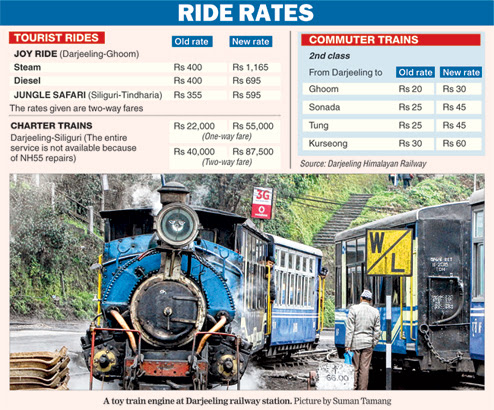
The price and time duration for the Joy Ride of Darjeeling Toy Train can vary depending on the class of travel and the season.The basic fare for a standard-class seat is around INR 1,310 (approx. USD 18) per person, while a first-class seat can cost around INR 1,975 (approx. USD 27) per person.

The Joy Ride typically takes around 2 hours to complete, starting from Darjeeling and ending at Ghum. However, it's worth noting that the train's timings can be subject to change, especially during the monsoon season.

To avoid disappointment, it's best to book your tickets in advance, either online or through a travel agent. You can also check the official website of the Darjeeling Himalayan Railway for the latest information on schedules and fares.


Tips:

There are two types of Engines are available for the joy ride of Darjeeling Toy Train. First one is Coal -completely steam engine from the British Ear. Second one is Diseal Engine. Both of them looks same and runs at the same time - together with the time gap of few minutes. But to sit in such an ancient steam engine is a lifetime opportunity even though you have to  pay few extra buck for the older engine.

During tourist season- Joy ride runs for at least three to four times in a day. But do not be slothful to book your ticket in advance as mostly it's booked for many days. So, try to book your ticket at least a week ahead or book the ticket as soon as you reach Darjeeling. 

It's important to note that the schedule can be subject to change, especially during the monsoon season when the railway is often affected by landslides and other weather-related disruptions. It's always a good idea to confirm the schedule with the railway authorities or your travel agent before making your plans.

In conclusion, the joy ride of Darjeeling Toy Train is a must see attraction for anyone visiting Darjeeling. The train ride is an experience that will stay with you for a lifetime, offering a glimpse into the region's natural beauty, cultural heritage, and unique engineering feats. So, book your ticket now and get ready for an unforgettable journey through the heart of the Himalayas. 


Read Detailed post about Darjeeling Himalayan Railway - NJP Siliguri- Darjeeling


Chugging Through the Clouds: The Enchanting Journey on Darjeeling Toy Train

Darjeeling Himalayan Railway, also known as the "Toy Train", is a narrow-gauge railway that runs between Siliguri and Darjeeling in West Bengal, India. The railway was built between 1879 and 1881, and was declared a UNESCO World Heritage Site in 1999.

The Darjeeling Himalayan Railway covers a distance of 88 kilometers (55 miles) and passes through breathtakingly beautiful landscapes, including tea gardens, dense forests, waterfalls and steep hills. The train passes through several stations, including Siliguri, Sukna, Rangtong, Tindharia, Gayabari, Mahanadi, Kurseong, Tung, Sonada, Ghum, and Darjeeling.


The Darjeeling Himalayan Railway is known for its unique engineering, which includes steep gradients, tight curves, and zigzag reverses. The railway has a maximum gradient of 1 in 20, which means that for every 20 meters the train travels horizontally, it ascends 1 meter vertically. The railway also has several loops and spirals that allow the train to climb steep hills.

One of the highlights of the Darjeeling Himalayan Railway is the Ghum Station, which is the highest railway station in India at an elevation of 2,258 meters (7,407 feet). The station has a museum that showcases the history of the railway and its impact on the region.

The Darjeeling Himalayan Railway has several classes of travel, including first-class, second-class, and third-class. First-class offers comfortable seating and panoramic views, while second-class is more basic with bench seats. Third-class is the cheapest option and has wooden seats.


Best Time in Darjeeling Toy Train 

The best time to visit the Darjeeling Himalayan Railway is between October and December, when the weather is pleasant and the views are stunning. However, the railway is closed during the monsoon season (June to September) due to the risk of landslides.

Cost of Ticket Fare - NJP- Darjeeling

The cost of tickets for the Darjeeling Himalayan Railway varies depending on the class of travel and the distance covered.

For example, a one-way ticket from New Jalpaiguri (NJP) to Darjeeling in first-class costs around 1,500 Indian Rupees (approximately $19 USD). Second-class tickets cost around 740 Indian Rupees (approximately $10 USD), while third-class tickets cost around 345 Indian Rupees (approximately $5 USD).It's worth noting that ticket prices can change, so it's a good idea to check with the railway before booking.

How much Time Takes for the Journey? 

In terms of the journey time, it takes approximately 7-9 hours to travel from NJP to Darjeeling on the Darjeeling Himalayan Railway. However, this can vary depending on factors such as the time of day, the number of stops along the way, and any delays or disruptions. 

Everyday train leaves at 10 Am from NJP station and it normal reaches to its destiny at 7:30 PM in Darjeeling Railway station which is the last halt for the train. 

Overall, the journey on the Darjeeling Himalayan Railway is not only a means of transportation but also a unique experience that offers stunning views of the Himalayan landscape and a chance to soak up the region's rich culture and history.


Does Food  also included in the Ticket Fare? 

The tickets for the Darjeeling Himalayan Railway, also known as the Toy Train, do not generally include food and snacks. However, some higher-class tickets may include refreshments or meals.

First-class tickets may include complimentary snacks and drinks, such as tea or coffee, depending on the specific train and service. However, it's best to check with the railway before booking to confirm what's included in your ticket.

For those who want to enjoy a meal or snacks during their journey, there are vendors selling food and drinks at some of the train stations along the route. These vendors sell a variety of snacks and drinks, including tea, coffee, sandwiches, and sweets.

Additionally, many travelers opt to bring their own snacks and drinks on board the train, as the journey can take several hours and it's a good idea to have something on hand to eat or drink.

Overall, while the tickets for the Darjeeling Himalayan Railway do not typically include food and snacks, there are plenty of options available for those who want to enjoy a bite to eat or a refreshing drink during their journey.

The First Class Coach


In conclusion, the Darjeeling Himalayan Railway is a must-visit attraction in India for railway enthusiasts and nature lovers alike. Its unique engineering and breathtaking scenery make it a UNESCO World Heritage Site and a popular tourist destination. So if you're planning a trip to India, be sure to add the "Toy Train" to your itinerary.

Read  "Explore the Top 7 Most Visited Places in Darjeeling- Your Ultimate Travel Guide"